
Sticker Sheets and Small-Format Art: The Tier Everyone Treats as Filler
Stickers get treated as the cheap thing you put at the front of the table. The journalling boom has quietly turned small-format work into a repeat-purchase category with its own buyers, and most artists are still making it wrong. The specs, the maths and the honest downsides.
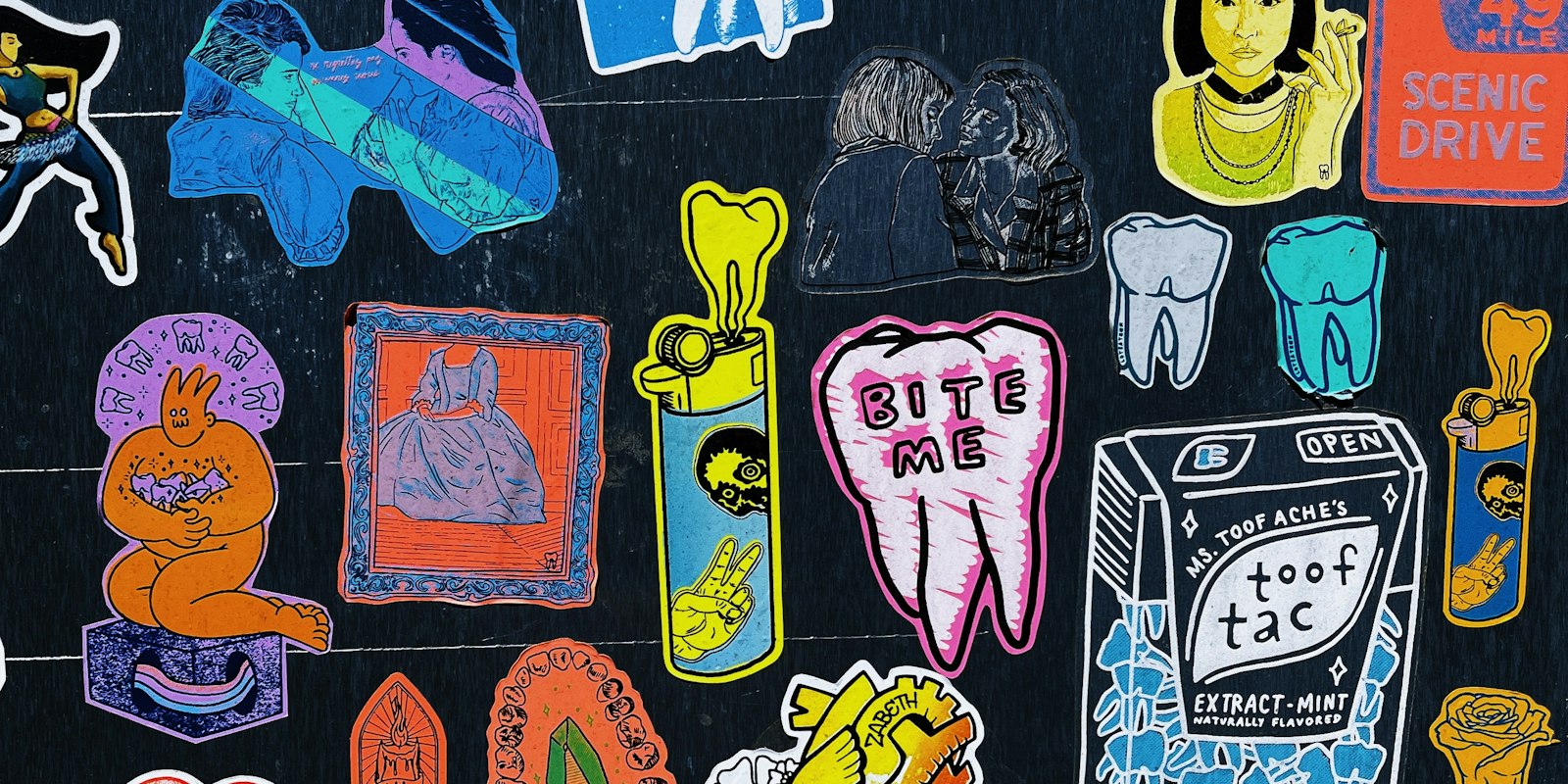
At almost every artist alley table, the stickers are down the front, priced at four dollars, and treated as the thing that gets people to stop walking. The prints are the real product. The stickers are bait.
That was a reasonable read a few years ago. It is a worse read now, because the buyers changed.
What actually changed
Searches containing “for journaling” have more than quadrupled across 2026, with “people stickers for journaling” and “small sticker printer for journaling” both showing up as breakout terms. Michaels’ 2026 trend report has junk journal searches up 63% year on year, resin charm searches up 115%, and Shrinky Dink kits up an absurd 414%.
We wrote about the supply side of that in junk journalling for artists. This is the demand side. A very large group of people has taken up a hobby whose entire consumable is small printed paper things, and they buy them the way other hobbies buy yarn: repeatedly, in multiples, without agonising.
The difference matters. A print buyer buys one print and has a wall. A journaller buys a sheet, uses it up, and buys another. Small format went from a loss-leader to the only merch category with genuine repeat purchase built in, and most artists are still designing for the old market.
The five things worth making
- Kiss-cut sticker sheets. The core product. Several designs sharing one backing, sold as a set.
- Memo-style sticker pads. The format Etsy’s journalling sellers have converged on: fifty small stickers, one design per page, bound like a memo pad at the top edge so buyers tear them off. Common size is around 40 by 60mm.
- Ephemera packs. Printed paper scraps, tickets, labels, tags and off-cuts in your style, sold loose in a bag. Cheapest thing on this list to produce and the one that most rewards having an actual visual identity.
- Washi-style tape and paper strips. Higher setup cost, strong repeat purchase.
- Bookmarks and charms. The old artist-alley standbys, which still work and which the journalling crowd buys for different reasons.
Notice what is missing: the single large die-cut laptop sticker. It still sells. It is just no longer where the category is growing.
The sheet is the product, not the stickers on it
This is where the craft actually lives, and it is a composition problem before it is a business one.
A sticker sheet is not a folder of your best small drawings. It is one designed object, with the same demands as any other layout: a dominant element, a size hierarchy, a repeating colour so the set reads as a set, and enough small utility pieces that someone can actually build a page with it. People buy a sheet because it functions together.
The practical version:
- One hero, three mediums, six smalls. One piece big enough to anchor a page, a few mid-size characters or motifs, and a lot of little bits: labels, arrows, tabs, stars, blank frames, date boxes. The smalls are what gets used up, and used up means bought again.
- Restrict the palette. Four or five colours across the whole sheet. This is the single biggest difference between a sheet that looks professional and one that looks like a contact sheet.
- Leave usable blank space. Label shapes with nothing written on them, empty frames, plain tabs. Journallers want to write on things.
- Design for the peel. Anything thinner than about 3mm at its narrowest point is miserable to get off a backing. Fine antennae, whiskers and tails need thickening or absorbing into a bigger shape.
If the layout side is new to you, our composition guide is the same set of ideas at a different scale.
The specs that catch people out
Print shops reject more sticker files than almost any other product, and it is nearly always the same four things.
- Vector, or no cut line. A flat PNG or JPEG cannot carry a dieline. Supply PDF, AI or SVG with the vectors intact, 300dpi, CMYK.
- 3mm bleed on every exposed edge. The cut wanders. Without bleed, a half-millimetre of drift gives you a white sliver down one side of every sticker in the run.
- 2mm of safety inside the cut path. Text, faces, the tip of a tail: anything you care about sits well inside the line. This is the rule people learn by receiving a box of five hundred stickers with the signature cropped off.
- A clean dieline on its own top layer. One tidy vector path, no jagged micro-detail, no hairline notches. Complicated cut paths cut badly and cost more.
On a sheet, add roughly 6mm of margin at the sheet edge and 4mm between individual stickers, or the kiss-cut blade will clip its neighbours.
Kiss-cut or die-cut? Die-cut for a single standalone design. Kiss-cut for everything on a sheet, and for any shape small or fiddly enough that a loose version would curl, tear or vanish.
The maths, without the optimism
Minimum orders in this category are genuinely low, which is the whole appeal. Sticker Mule starts at ten pieces and has run ten custom stickers for around nine dollars with shipping included. StickerApp’s die-cut minimum sits around twenty-six dollars, with per-sticker costs roughly between forty cents and a dollar twenty depending on quantity and finish. Vograce takes many products at ten pieces. You can test a design for less than dinner.
Pricing follows a well-worn pattern: three to five dollars for a single, then bundles at three for five or five for ten, because a buyer can do that sum without thinking. A sensible floor is 2.5 times your landed cost, and landed cost means the print price plus shipping to you, plus packaging, plus platform fees. Artists who price off the printer’s invoice alone are routinely working for nothing.
Two honest warnings.
Singles have a terrible hourly rate. A four-dollar sticker that took you three hours to draw needs to sell in real volume before it pays for the afternoon. The sheet is what fixes this: the same three hours produces a twelve-dollar product, and the smalls on it cost minutes each.
Shipping eats small orders alive. This is the genuinely painful part in Australia. A flat mailer that stays inside Large Letter dimensions posts for a fraction of a parcel, and the moment an order needs a satchel the margin on a twelve-dollar sale largely evaporates. Design your packaging to stay flat, set a free-shipping threshold that pushes people into a second sheet, and be honest with yourself that domestic-only may be the only version that works at first.
The thing competing with you
Be aware of it: “small sticker printer for journaling” is a breakout search term because a lot of journallers are buying cheap thermal printers and printing their own. That is a real substitute for generic filler, and it is why generic filler is a bad business.
It is not a substitute for your characters, your line, or a set designed to work together. The artists doing well in this category are not selling stickers. They are selling a recognisable style in a format that gets used up. Which is, usefully, the same thing that makes OCs into art toys and the same reason emote work pays: people are buying the character, and the object is just how they get to keep it.
If the characters are not yours, the fan merch caveats apply exactly as they do everywhere else. Tolerated, never guaranteed.
Getting found
The awkward truth is that nobody searches a shop they have not heard of. Sticker sales run downstream of somebody liking your work first, which makes the portfolio the actual sales channel. Our prints and merch guide covers the shop side; the part it cannot do for you is the audience.
Post the artwork on its own, tagged for what it is, before it is a product. A sheet layout is a legitimate piece of design work and worth posting as one. Somewhere built on tags and categories, where a tag page outlives the day you posted to it, a set of sticker designs can sit in one collection that keeps working long after the launch post has scrolled away.
Final thoughts
Small format stopped being the cheap thing at the front of the table the moment several hundred thousand people took up a hobby that consumes it. The artists who notice are designing sheets rather than stickers, pricing off landed cost rather than print cost, and treating the layout as a real piece of work.
Order ten of something. See what happens. It is the cheapest experiment in merch and it always has been.
artbase is free to join, sorts work by tags and categories as well as by newest and trending, and is a reasonable place to put the designs where the people who like small weird paper things can actually find them.
Frequently asked questions
What is the difference between kiss-cut and die-cut stickers?
Die-cut goes through the vinyl and the paper backing, giving you a single standalone sticker shaped exactly like the artwork. Kiss-cut goes through the vinyl only, leaving the backing intact, so several designs can share one sheet and peel off individually. Die-cut suits a single hero design sold on its own. Kiss-cut is the right call for sheets, packs, and shapes too small or fiddly to survive as loose stickers.
How should I set up a sticker file for printing?
Work at 300dpi in CMYK, and supply a PDF, AI or SVG with the vectors intact, because a flat PNG or JPEG cannot carry a cut line. Add 3mm of bleed on every exposed edge, keep anything critical at least 2mm inside the cut path, and put the dieline on its own top layer as a clean vector with no jagged micro-detail. On a sheet, leave roughly 6mm of margin at the sheet edge and about 4mm between stickers.
How much should I charge for stickers?
Single die-cut stickers commonly sell for three to five dollars, and bundles like three for five or five for ten are the standard nudge upward because buyers can do the sum instantly. A workable floor is about 2.5 times your landed production cost per item, which has to include the printing, the shipping to you, the packaging and the fees, not just the print price.
Is it worth selling stickers if my audience is small?
It is the lowest-risk place to start, because minimum orders are genuinely small: ten pieces at some printers, or around twenty-five dollars at others. That means you can test a design for the price of a takeaway meal rather than committing to a warehouse of unsold stock. Just do not expect a good hourly rate on singles. The economics only work on sheets and repeat buyers.