
The 30-Day Drawing Challenge: A Prompt List That Actually Builds Skill
A complete 30-day drawing challenge with a daily prompt list designed to build real skills — plus how much time each day actually needs, and how to finish without burning out.
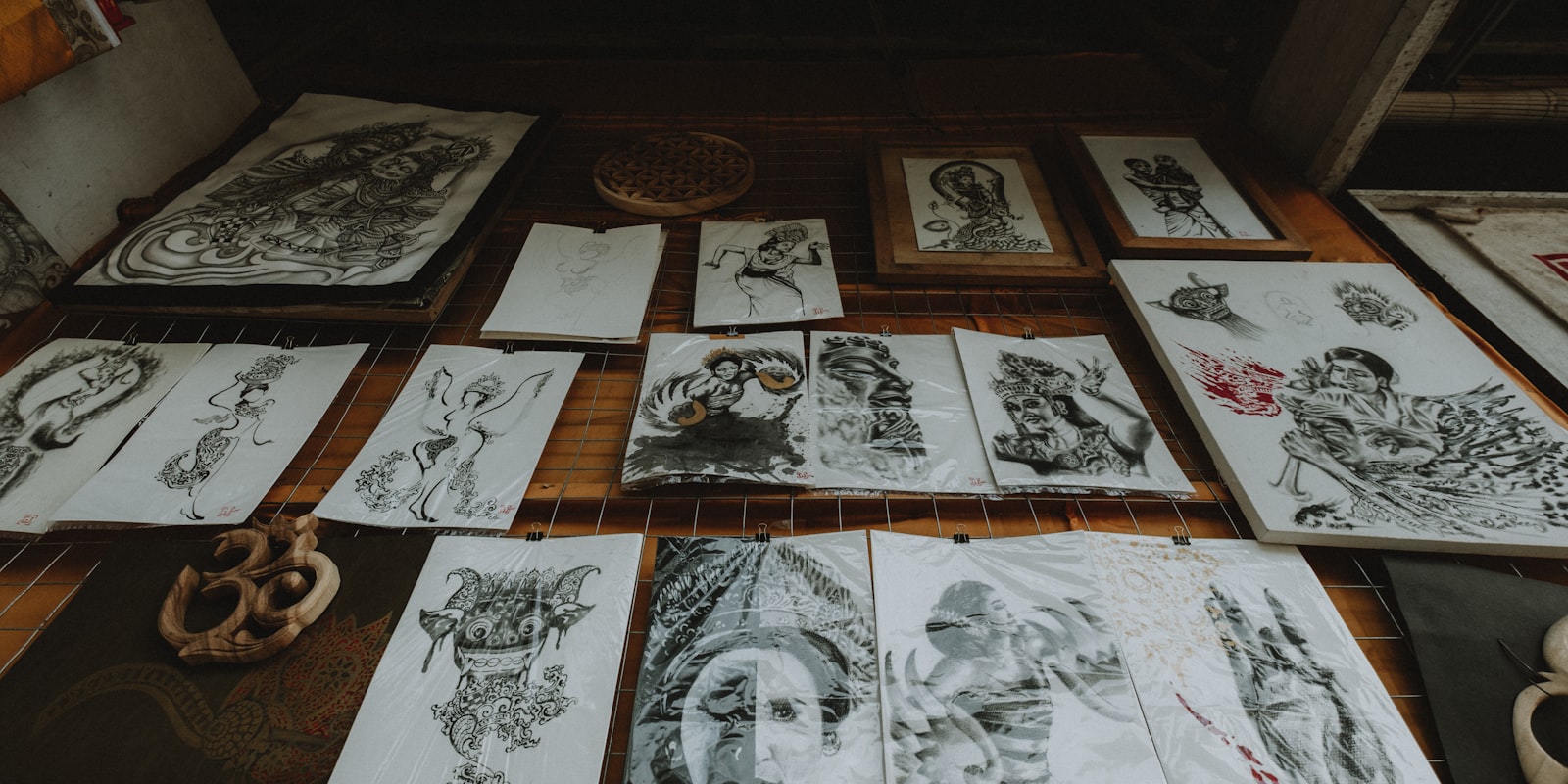
Thirty days, one drawing a day. It’s the oldest structure in the self-improvement book, and for artists it genuinely works — not because streaks are magic, but because a month is long enough to build a habit and short enough to see the finish line from the start.
The catch: most 30-day prompt lists are thirty random nouns, which builds the habit but wastes the reps. This one is different — the prompts rotate deliberately through fundamentals (gesture, light, perspective, colour, story), so by day 30 you’ve touched every muscle group at least three times. It’s deliberate practice wearing a party hat.
The rules (there are only four)
- Timebox it: 20–40 minutes a day. This is the rule that decides whether you finish. Challenges die when day 6 becomes a three-hour render and day 7 inherits the dread. Sketch quality is the intended quality.
- Skip, don’t stack. Miss a day? It’s gone. Draw today’s prompt today. A backlog of owed drawings is how a challenge becomes homework, and 25/30 is a resounding success.
- Same tool is fine, same subject is not. Use whatever medium you like all month, but let the prompts drag you away from your comfort subject. That’s where the growth hides.
- Bad days count double. The tired-evening five-minute thumbnail is worth more to the habit than the weekend masterpiece. Showing up badly is still showing up.
The prompt list
Week 1 — loosen up. The goal is momentum, not quality.
- Day 1: Self-portrait, any style, no pressure — it’s your “before” photo
- Day 2: The room you’re in, five-minute thumbnail
- Day 3: Twenty gesture drawings, 30 seconds each
- Day 4: Your hand holding something
- Day 5: An object on your desk, lit dramatically with a phone torch
- Day 6: A tree — from life or a photo, not from memory
- Day 7: Free day: draw your comfort subject as a reward
Week 2 — light and form.
- Day 8: A sphere, cube and cylinder under one light source (yes, really — it’s twenty minutes and it recalibrates everything)
- Day 9: A white object on a white surface
- Day 10: The same simple object in morning light and lamplight
- Day 11: A portrait in three values only
- Day 12: Drapery: a towel or shirt tossed over a chair
- Day 13: Something metallic, something glass — side by side
- Day 14: Free day: redraw any piece from week 1 and notice what changed
Week 3 — space and story.
- Day 15: The corner of a room in two-point perspective
- Day 16: A street scene, thumbnail-sized, big shapes only
- Day 17: A character in an environment (stick-figure environment allowed)
- Day 18: The same scene from a worm’s-eye and a bird’s-eye view
- Day 19: An interior with one window as the only light source
- Day 20: A moment just after something happened — imply the story
- Day 21: Free day: draw the prompt from this week you enjoyed least, again (it’s the one with your name on it)
Week 4 — colour and voice.
- Day 22: A scene in only two colours (colour theory, applied)
- Day 23: The same small scene in a warm palette, then a cool one
- Day 24: A master study of an artist you admire — palette and light, not line-for-line
- Day 25: A character built around one colour — our OC guide can spark one
- Day 26: Your favourite place, from memory, mood over accuracy
- Day 27: An emotion as a landscape
- Day 28: Something from your camera roll you’ve been meaning to draw
The finale.
- Day 29: Plan a finished piece: thumbnails, notes, colour roughs — composition brain fully on
- Day 30: Make the piece. Take your full timebox, or gloriously ignore it today
- Day 31 (bonus): Self-portrait again. Put it next to day 1. Say something kind to the day-1 artist.
How to survive the middle
Every 30-day challenge has the same shape: honeymoon week, wall around days 9–12, grim trudge through the late teens, then a strange second wind once the end is visible. Knowing the shape is half the defence. The other half:
- Prepare a “minimum viable drawing”. Decide in advance what your worst-day version is (one thumbnail, one gesture page). Deciding while tired is how you decide to quit.
- Draw at the same trigger daily — after coffee, after dinner. Habits attach to anchors, not willpower.
- Tell someone. Accountability doesn’t need an audience of thousands; one friend who asks “day 14?” is enough. Doing a challenge alongside others — a group, a shared tag, a friend on the same list — turns the trudge into company, which is exactly the effect art communities have on practice in general.
- If you burn out, stop. A challenge is a tool, not a debt. Feeling fried by day 20 and resting is a better outcome than white-knuckling to 30 and not drawing again for two months — the burnout maths never favours the streak.
Posting the series (optional, but it helps)
You don’t have to post a single drawing. But a challenge posted has two quiet superpowers: the accountability is built in, and the format is visibly satisfying — a 30-image series shows improvement in a way no single piece can. Post under one consistent tag so the whole run is browsable, title them simply (“Day 12 — drapery”), and let the rough days stand; people root for a challenge in progress far more than they judge it.
If you’re looking for a good home for a series like this, artbase members run monthly challenges in groups with shared tags — and a 30-day run is a lovely thing to have on a portfolio when it’s done. No pressure either way; the drawing is the point.
Final thoughts
A 30-day challenge won’t transform your art in a month — nothing does. What it reliably transforms is your relationship with drawing: from something you wait to feel ready for into something you simply do. Timebox it, skip don’t stack, let bad days count, and put day 30 next to day 1 when you’re done.
Prefer a gentler on-ramp? The year-round challenge calendar has community-run alternatives every month of the year, and the 100+ drawing ideas list works with no streak attached at all.
Frequently asked questions
Do 30-day drawing challenges actually improve your art?
Yes, but the improvement comes from the consistency, not the streak itself. Thirty consecutive days of drawing — especially with prompts that rotate between fundamentals like light, gesture, perspective and colour — builds the daily habit and touches skills you would normally avoid. One month will not transform your art, but it reliably kick-starts the routine that does.
How long should each day of a drawing challenge take?
Twenty to forty minutes is the sustainable sweet spot. Challenges fail when every prompt becomes a three-hour finished piece; by day nine that workload collapses. Sketch-quality work absolutely counts, and a five-minute thumbnail on your worst day keeps the streak honest.
What happens if I miss a day of a drawing challenge?
Skip it and draw the current day — never stack missed days into a backlog, because a debt of three drawings is how challenges die. A 25-out-of-30 challenge is a success by any sane measure. The goal is the habit, not a perfect scorecard.
Should I post my drawing challenge art online?
If you can, yes — posting adds gentle accountability, and a 30-day series makes your improvement visible in a way single pieces never do. Post under a consistent tag so the series is browsable, and do not worry about polish: people genuinely enjoy watching a challenge unfold, rough days included.