
How to Create an OC: Original Characters from First Spark to Final Design
A complete guide to creating an original character — finding the core idea, building personality before costume, designing a readable silhouette, and actually developing your OC by drawing them.
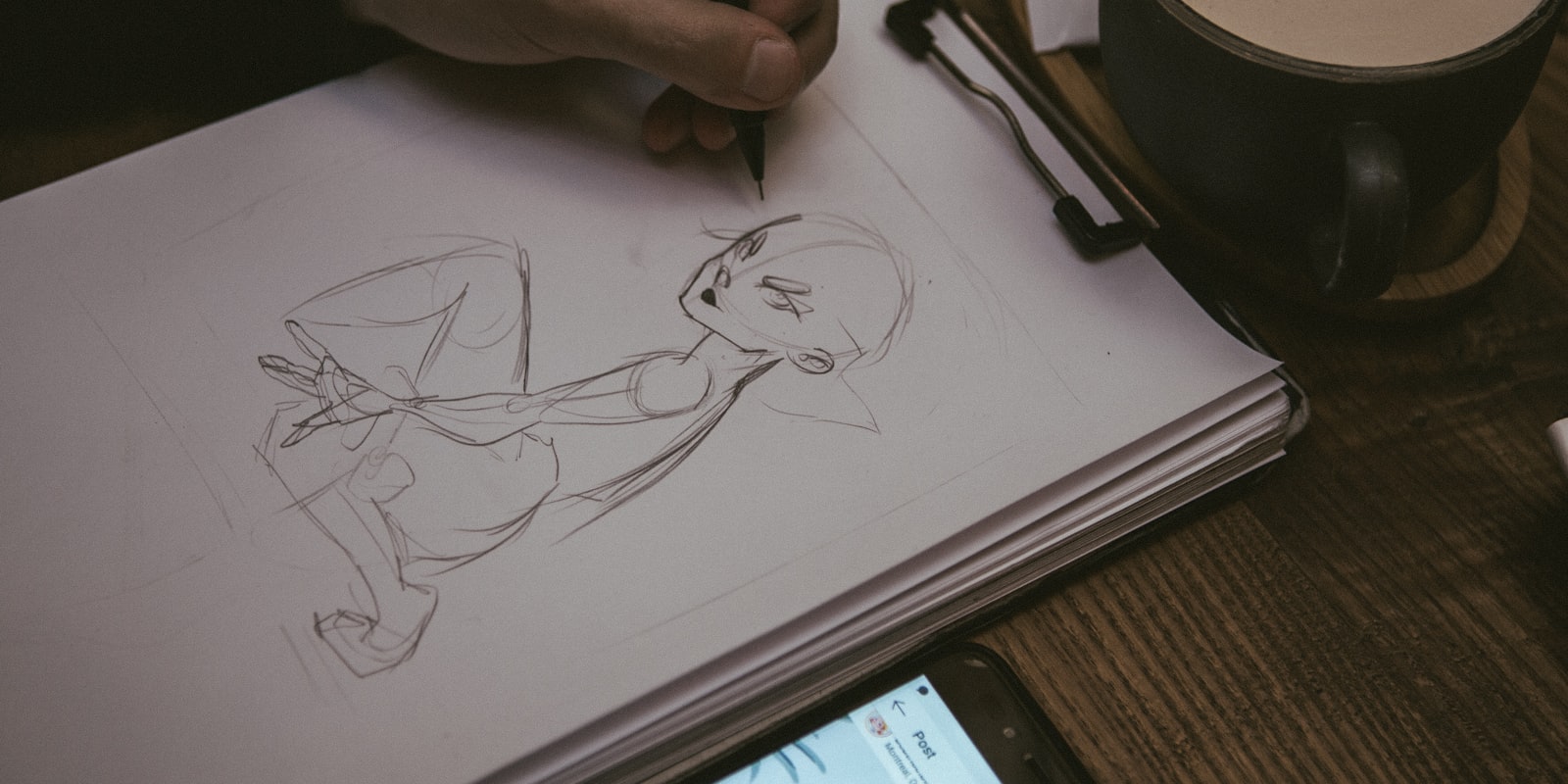
Somewhere between “I drew a person” and “I drew my person” is one of art’s best feelings. An original character — an OC — turns drawing practice into storytelling: suddenly the anatomy studies have a face, the outfit design has an owner, and the blank canvas has a protagonist waiting in the wings.
OC culture is enormous — trades, DTIYS challenges, hundred-page lore documents, characters that outlive the styles they were born in — and joining it requires no permission. But “just make a character!” is the same trap as “just draw anything!”: too open to start. Here’s a process with handholds, from first spark to a design that holds up.
Start with a core, not a checklist
The classic beginner move is filling out a template — height, favourite food, blood type — and ending up with a spreadsheet that somehow contains no person. Traits don’t make characters. A core does: one compressed idea with tension in it, from which everything else can be derived.
Good cores are small and loaded:
- A contradiction: a pacifist mercenary; an immortal who keeps adopting mayflies; a cheerful gravedigger
- A want plus an obstacle: wants to see the ocean, born in a landlocked fortress city; wants quiet, hears everything
- A job with implications: lighthouse keeper at the edge of the map; the tiny god of lost socks; last librarian of a drowned city
- A relationship: the dragon’s accountant; the hero’s disappointed older sister
Test a core by asking: does this suggest how they stand, dress, talk? “Kind but sarcastic” suggests nothing. “Retired sea-monster hunter who misses the monsters” is already posing itself — you can see the weathered coat, the trophy she won’t sell, the way she watches the water. If you’re stuck for sparks, character prompts 41–50 on the drawing ideas list are cores in disguise.
Personality before costume
It’s tempting to leap straight to the fun part — hair, outfit, colours. Resist for one session, because design decisions are answers, and personality is the question. You don’t need a novel; you need working answers to a handful of load-bearing questions:
- What do they want, and what’s in the way?
- What are they best at? What are they embarrassingly bad at?
- How do they treat a stranger? A friend? An enemy who’s down?
- What would they never do — and under what pressure would they do it anyway?
- What’s one small, human habit? (Collects bottle caps. Talks to plants. Lies about liking coffee.)
Five answers is genuinely enough to start drawing. Everything else — the tragic backstory, the lore document, the playlist — accrues later, and accrues better on the page than in the spreadsheet.
Design: silhouette, palette, signature
Now the fun part, with three professional tools to aim it:
Silhouette first. Fill your character with solid black — are they recognisable? Every iconic character passes this test; it’s the spine of character design. Thumbnails help enormously here: sketch five to ten tiny silhouette variations — vary the mass (big coat? spindly? round?), the posture, the one exaggerated feature — before committing. Shape language does half the personality work on its own: round shapes read friendly, angular shapes read dangerous, and a character built on drooping curves is tired before they say a word.
Palette: three-ish colours, on purpose. Pick a dominant colour that matches the personality, a supporting neighbour, and one accent for the eye to find — the same 60/30/10 logic as any palette. A limited, deliberate palette is the difference between “OC” and “person wearing everything I like at once”. It also makes them recognisable in other people’s styles, which matters the day someone draws them for you.
One or two signature elements — not seven. The scar, the impractical scarf, the goggles they never use, the trophy tooth on a cord. Signatures are memory hooks and story hooks at once. Beginners stack ten; the design drowns. Choose the one or two that come from the core (the monster-hunter’s tooth earns its place; the random belts don’t) and let the rest of the design stay quiet around them.
Then draw the turnaround and expression sheet — front/side/back, plus six emotions. Unglamorous, and it converts “a good drawing of a character” into “a character I can draw again”, which is the entire difference.
Develop them by drawing them
Here’s the secret of every beloved OC: they weren’t designed complete — they were discovered through mileage. The character after fifty drawings has opinions the character sheet never predicted. So generate mileage on purpose:
- Daily-life drawings. How do they sit when exhausted? What do they order? What’s in their pockets? (Prompt 68 works wonders on OCs.) Mundane beats epic for personality discovery, ten times out of ten.
- Wrong-context drawings. The fantasy knight in a laundromat. The space captain at a farmers’ market. Wrong contexts force the personality to show up without the costume’s help.
- Interaction drawings. Characters are mostly relationships — give them a foil, a nemesis, a long-suffering friend. Duos develop twice as fast as singles.
- Retell their moments. The day everything changed; the smallest kindness anyone showed them. You’ll discover backstory by drawing it that you’d never have written.
Redesigning as you go isn’t just allowed, it’s the norm — most long-running OCs have eras, and the v1-to-v4 comparison post is a beloved genre for good reason.
Sharing your OC (the community part)
OCs thrive in company. They’re the standard currency of art trades (“I’ll draw yours, you draw mine” is the classic opener), DTIYS challenges, and October’s OC-tober on the challenge calendar. Seeing your character interpreted through someone else’s style and eye is one of the purest delights in online art — and routinely reveals which parts of the design actually carry (the silhouette and signatures survive; the fussy details don’t).
Practical sharing notes: post a clean reference sheet — trade partners need it, and it’s what makes your character drawable by others. Tag with the character’s name plus the usual discovery tags so entries and gift art stay findable. On artbase, OC reference sheets sit naturally in a collection alongside the art of them — one link handed to a trade partner, whole cast included.
Final thoughts
An OC is a long conversation between you and a character who doesn’t exist yet: start with a core that has tension in it, answer five personality questions, design silhouette-palette-signature in that order, then let fifty ordinary drawings tell you who they actually are. The lore document can wait. The laundromat drawing can’t.
Frequently asked questions
What does OC mean in art?
OC stands for "original character" — a character an artist invented themselves, as opposed to fan art of existing characters. OCs range from a one-off design to fully developed characters with backstories, relationships and entire worlds, and drawing them is one of the most popular corners of online art culture.
How do I start creating an OC?
Start with one strong core idea — a contradiction, a job, a want — rather than a list of traits: "a retired sea-monster hunter who misses the monsters" gives you more design material than pages of favourite colours and blood types. Build the personality first, then let the design express it, and expect the character to develop through being drawn rather than being planned.
What makes a good character design?
Readability and story. A strong design has a distinct silhouette recognisable in shadow, a deliberate and limited colour palette, one or two memorable signature elements, and visual choices that say something about who the character is. Complexity is not quality — most iconic characters are visually simple.
How do I develop my OC's personality?
Draw them into situations and answer questions with drawings: how do they sit when tired, what do they order, what makes them laugh, how do they fight or refuse to? Personality developed on the page sticks better than personality written in a profile — expression sheets, daily-life doodles and putting them in prompt challenges all work.