
Deliberate Practice for Artists: How to Improve Faster on Purpose
Drawing daily isn't the same as improving. Deliberate practice — specific goals, focused reps, honest feedback — is what separates ten years of growth from one year repeated ten times. Here's how to apply it to art.
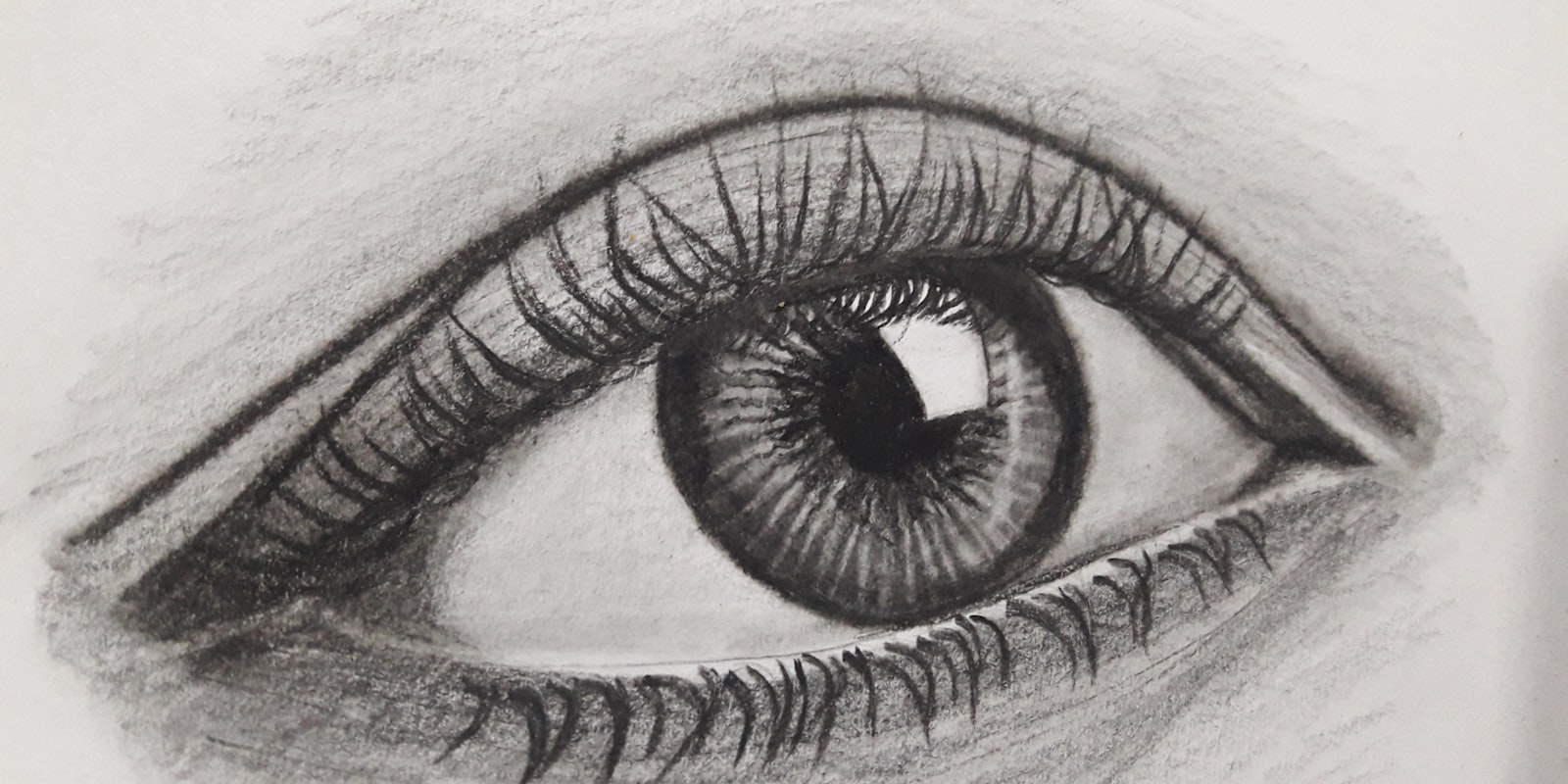
There’s a demoralising species of artist experience: you draw every single day, your streak app glows with pride — and your work looks the way it looked a year ago.
The missing distinction has a name. Psychologist K. Anders Ericsson, who spent decades studying how experts in music, sport and chess actually got that way, found that improvement doesn’t track hours logged — it tracks a specific kind of hours he called deliberate practice: effortful work on specific weaknesses, at the edge of your current ability, with feedback. Mileage maintains; deliberate practice builds.
Artists mostly know this intuitively (“just grinding doesn’t work”) without applying it structurally. Here’s the structure.
The four ingredients (and what art autopilot is missing)
Deliberate practice, translated out of the research and into the studio:
- A specific goal per session. Not “get better at anatomy” — “draw twenty hands holding cylindrical objects”. Not “improve colours” — “do five two-value studies before touching hue”. If you can’t tell whether you hit the goal, it wasn’t specific enough.
- Work at the edge. If it feels comfortable, you’re rehearsing; if it feels impossible, you’ve overshot. The productive zone is effortful-but-achievable — the drawing equivalent of a weight you can lift eight times, barely.
- Immediate self-check. Compare your attempt against the reference or intent during the session, spot the gap, and take another rep aimed at that gap. The rep–check–rep loop is the engine; a pile of unexamined sketches is just exhaust.
- Outside feedback on a cycle. You can’t see all your own gaps — every artist has systematic blind spots. This is where feedback that actually helps earns its keep, and why artists improve measurably faster inside communities than alone: the feedback loop closes in days instead of months.
Notice what’s not in the list: hours. Ericsson’s research repeatedly found that even elite performers sustain only a few hours of genuinely deliberate work a day — it’s tiring because it works. A focused half hour beats a foggy afternoon.
A session template you can steal
Thirty to sixty minutes, four beats:
| Minutes | Beat |
|---|---|
| 2 | Name the target: one weakness, one measurable rep (“10 gesture drawings, 60 seconds each, focus on the line of action”) |
| 20–45 | The reps, with reference, at the edge |
| 5 | The check: attempts beside reference — where exactly did they diverge? |
| 3 | One written note: what to target next time. (A dated sketchbook page or file naming does it — future-you needs the trail) |
That closing note quietly builds the thing every improving artist needs and almost nobody keeps: a record of your own trajectory. On months when progress feels invisible, the notes prove otherwise — a better mirror than comparing yourself to strangers’ highlight reels ever will be.
Studies, done so they actually teach
The study — reconstructing work or reality you admire — is the artist’s classic deliberate-practice rep, and there’s a version that works and a version that doesn’t:
- Observe and rebuild; never trace. The learning lives in your brain doing the analysis — where does that shadow actually stop? Tracing outsources exactly the analysis you came for.
- One variable per study. Study the palette or the lineweight or the face construction. “Copy everything” studies blur into mileage.
- Deviate afterwards. Redo the subject applying the lesson your way — the step that turns technique into your own style.
- Post them honestly or not at all. Credited studies are respected; studies passed off as originals are a reputation fire waiting to happen.
Plateaus and the practice–play balance
Two warnings from the research and from every artist who’s been at this a while:
Plateaus are part of the machinery. Skills consolidate unevenly — weeks of no visible progress routinely precede a jump, especially when a new sub-skill (say, perspective) is quietly reorganising older ones. The plateau exit is usually narrower targeting, not more hours.
All drills and no play kills the artist. Deliberate practice is by definition effortful, and a schedule of pure effort is a straight road to burnout. The sustainable shape pairs every study block with work made purely because you wanted to see it exist. Play isn’t a break from improvement — it’s where the drilled skills integrate, and it’s why you started.
Final thoughts
Draw daily if it brings you joy — but improve on purpose: one named weakness, reps at the edge, a check against the reference, a note for next time, and other people’s eyes on the work at regular intervals. That loop, run modestly but consistently, is the entire difference between ten years of growth and one year repeated ten times.
The feedback ingredient is the easiest to outsource: post the work where thoughtful critique is the culture. That’s artbase, and it’s open to everyone now.
Frequently asked questions
How many hours a day should I practise art?
Fewer than you fear, more regularly than you plan. Research on deliberate practice consistently finds that focused quality beats raw duration — a genuinely concentrated 30–60 minutes with a specific goal outperforms four distracted hours, and daily consistency outperforms weekend marathons.
Why am I not improving even though I draw every day?
Daily drawing on autopilot rehearses what you already do — including your mistakes. Improvement needs three missing ingredients: a specific target (one weakness per session), work at the edge of your ability, and feedback that tells you whether the rep worked.
Are art studies just tracing?
No. A study means observing a reference and reconstructing it yourself, which forces your brain to analyse structure, value and colour. Tracing bypasses exactly that analysis, which is why it teaches so little — and why traced work should never be posted as original.
What should I practise first as a beginner artist?
Basic shapes and construction, then values (light and dark) before colour, alongside regular drawing of things you enjoy. The fundamentals compound into everything else — but pairing them with fun pieces is what keeps you practising long enough for compounding to happen.